
Guide to Milan and the Lakes
Airports, districts, lakes, food and wine: what you need to know to get around the city and Lake Como well — starting with the fact that Malpensa is 50 km from the Duomo.
Milan is easy on foot and by metro; the lakes are not. Between the city, three airports and the shores of Como, Maggiore and Orta, time is nearly always lost in getting from one place to the next. This guide covers where it is worth going and how to get there without surprises.
Getting around with us
Three airports, three lakes and a city that runs on trade fairs: every arrival has its own logic.
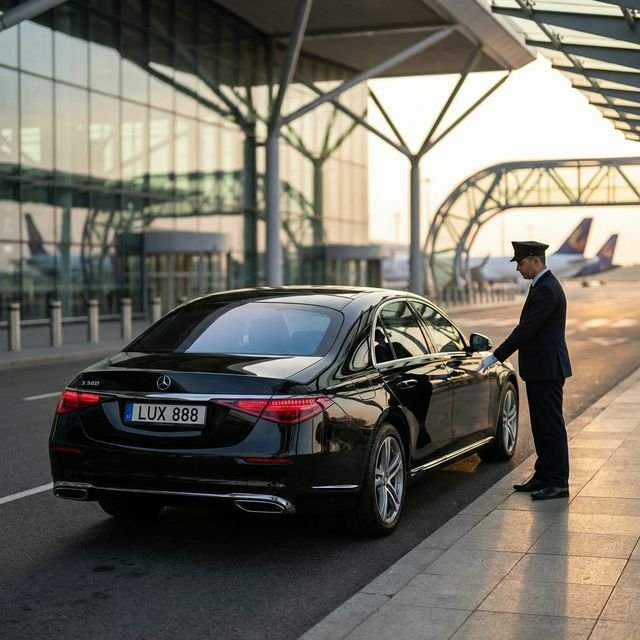
From Malpensa
Milan's main airport is 53 km from the Duomo and has two separate terminals: Terminal 2 is easyJet's, Terminal 1 serves every other airline. Your driver waits in arrivals at the right one, with a name board.

From Linate and Bergamo
Linate is the city airport, 8 km from the centre; Bergamo Orio al Serio is the low-cost one, 57 km from Milan but close to the Lecco arm of the lake. Same service: a fixed price per vehicle, luggage and tolls included.
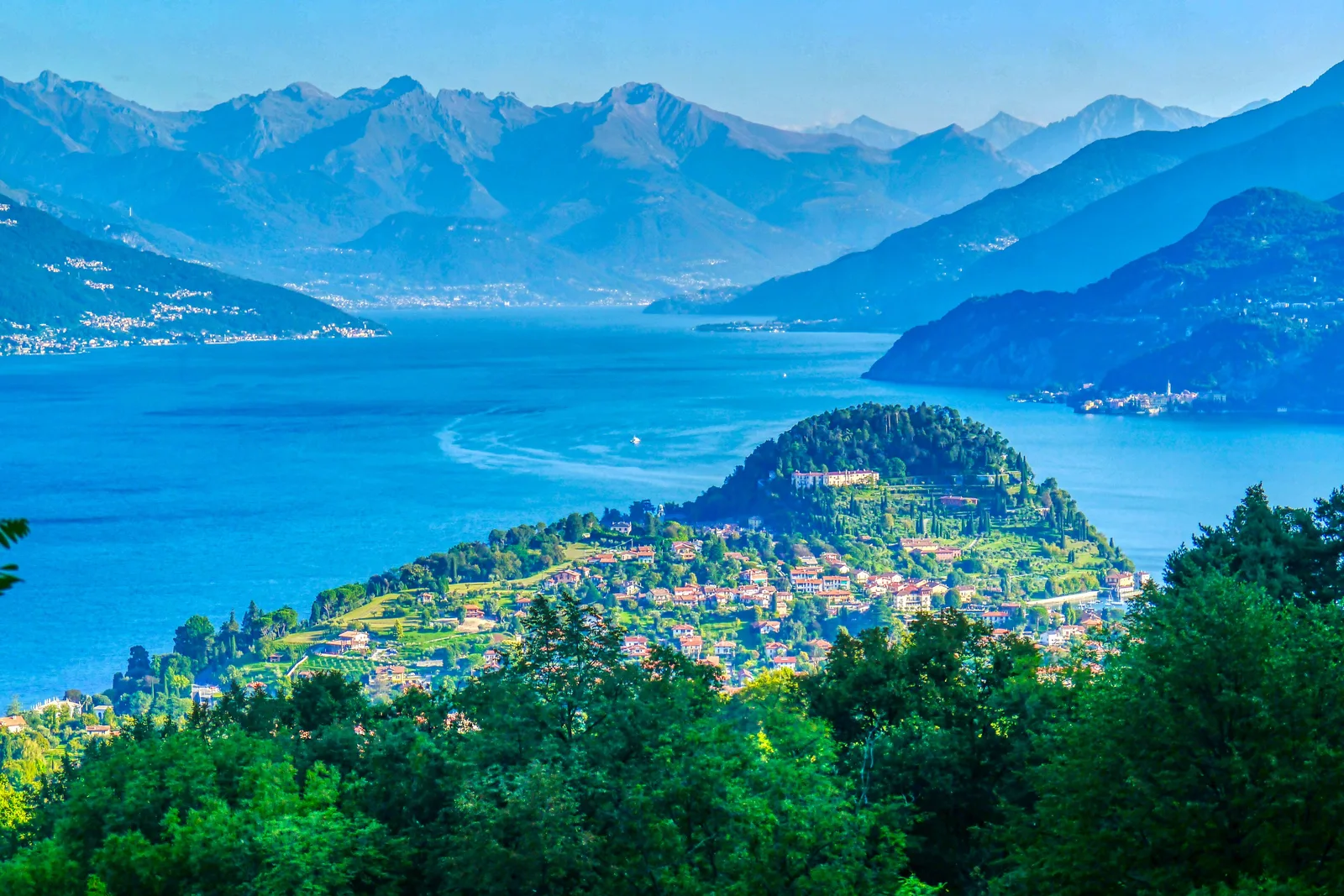
To the lakes
Como, Cernobbio, Tremezzo, Bellagio, Varenna, Stresa and Orta. On the lake roads, narrow and busy in summer, what counts is a driver who knows them and where the car stops outside your hotel.
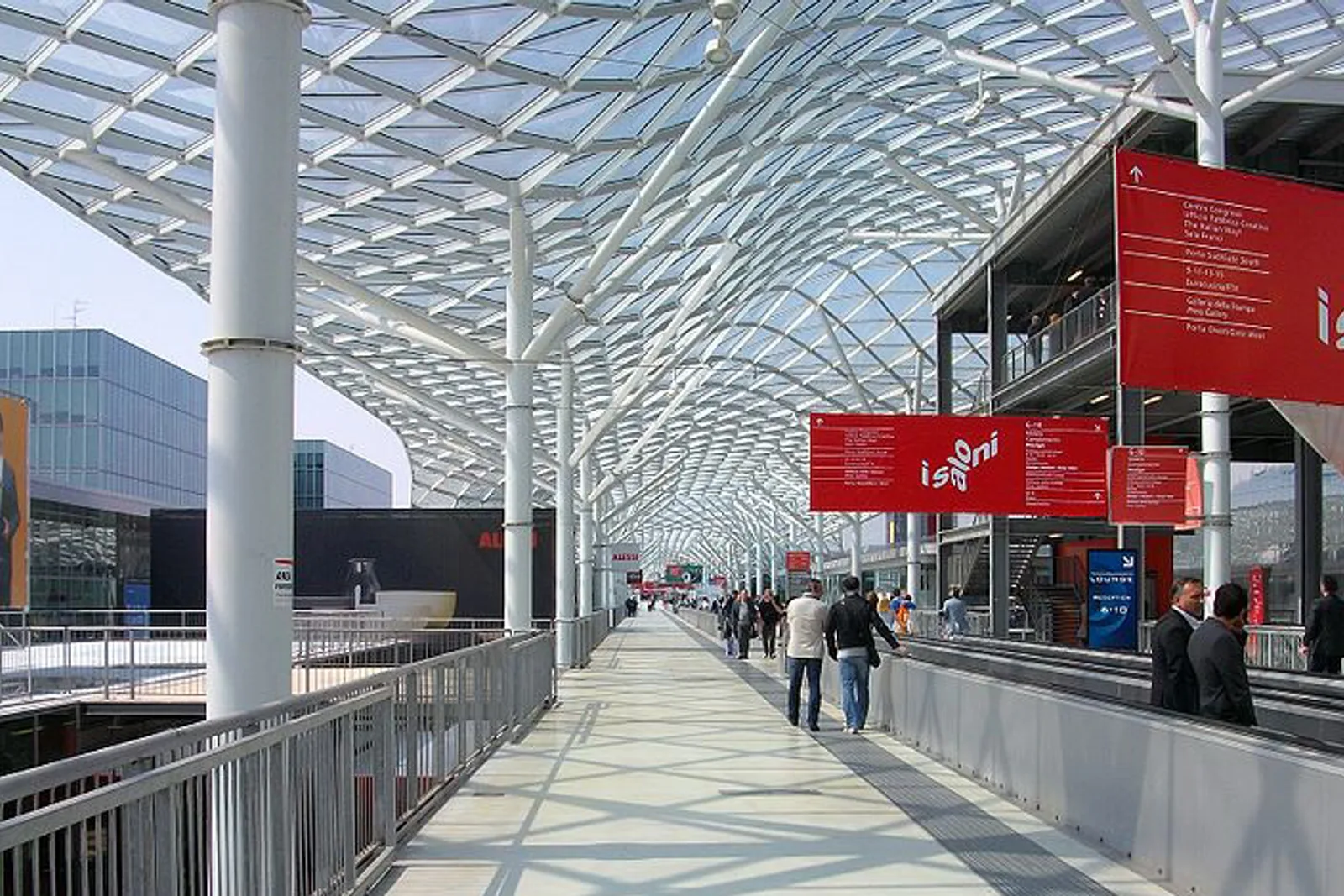
Trade fairs and big events
Fiera Milano Rho is 40 km from Malpensa and 21 km from Linate. During the Salone del Mobile and Fashion Week you go from the airport to the halls or your hotel without hunting for a taxi.
Airport to airport
Malpensa, Linate and Orio have no direct trains between them. Landing at one and flying out of another means crossing Lombardy: by car it is a single journey, with your luggage already loaded.
Milan and the lakes in eighteen places
The city, its districts and the lakes around it: what is worth the trip, with what to know before you go.
Risotto, cotoletta and aperitivo
Milanese cooking means butter, saffron and slow simmering. And then there is the aperitivo, an institution here.
Milanese cooking
Milan cooks with butter, not oil, and its best-known dishes were born in trattorias. In the evening, before dinner, an aperitivo on the Navigli or at the Darsena is the ritual everyone agrees on.
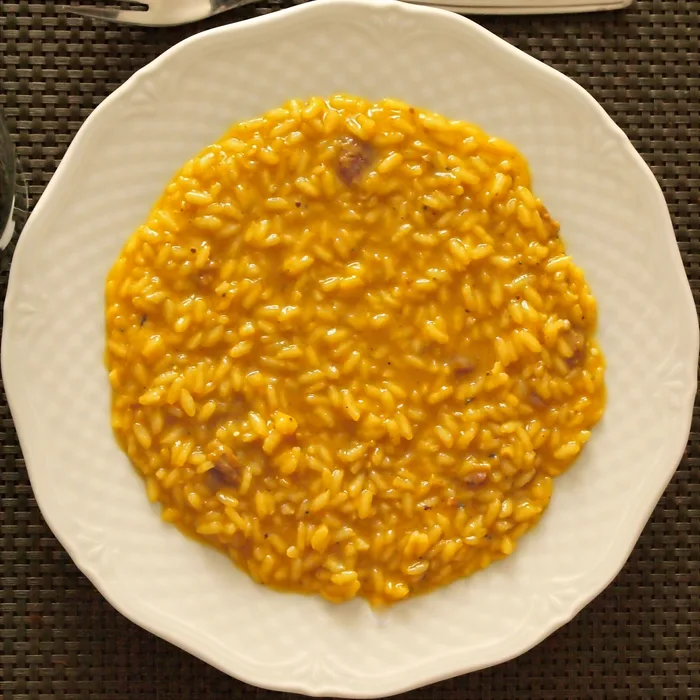
Risotto alla milanese
Rice finished with butter, beef marrow and saffron, which turns it golden. Often served with ossobuco.
Legend places its birth in 1574 on the Duomo building site, with an apprentice who tinted the stained glass with saffron.
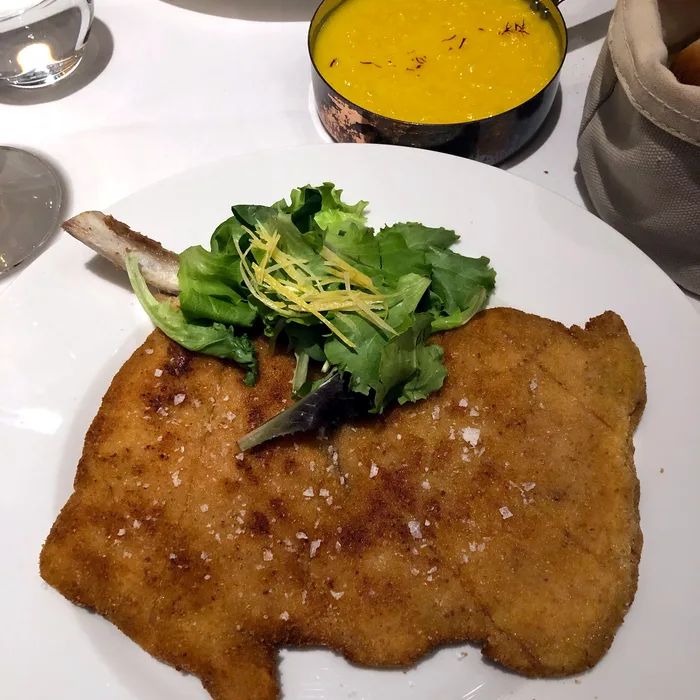
Cotoletta alla milanese
A bone-in veal loin chop, dipped in egg and breadcrumbs and fried in clarified butter. Thick, not beaten thin.
The City of Milan has recognised it with its own municipal designation of origin (De.Co.).
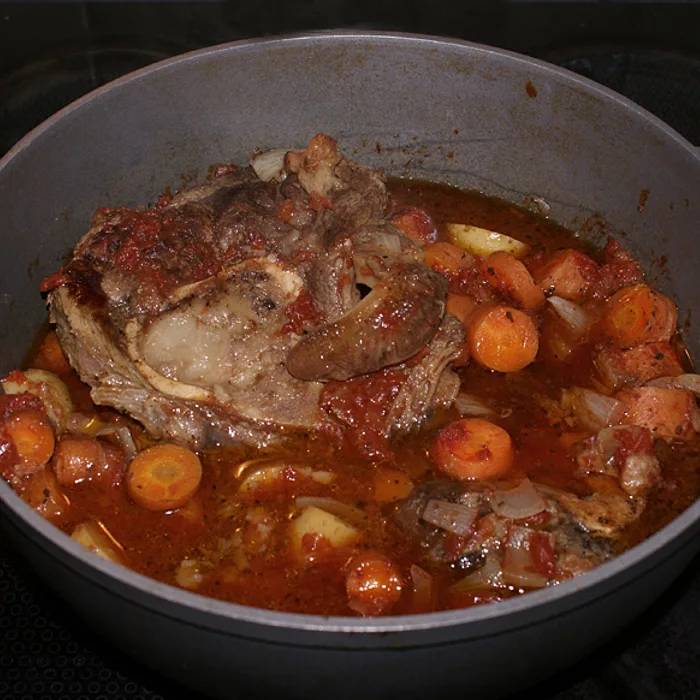
Ossobuco
Cross-cut veal shank with the bone and marrow, slowly braised and finished with gremolata of lemon zest, garlic and parsley.
The marrow is eaten with a thin spoon: the Milanese consider it the best part.
Mondeghili
Meatballs fried in butter, made from leftover boiled or roast meat, bread and grated cheese. Now an aperitivo classic.
The name comes from the Spanish albóndiga, a legacy of Spanish rule over Milan.
From the lake to the valleys
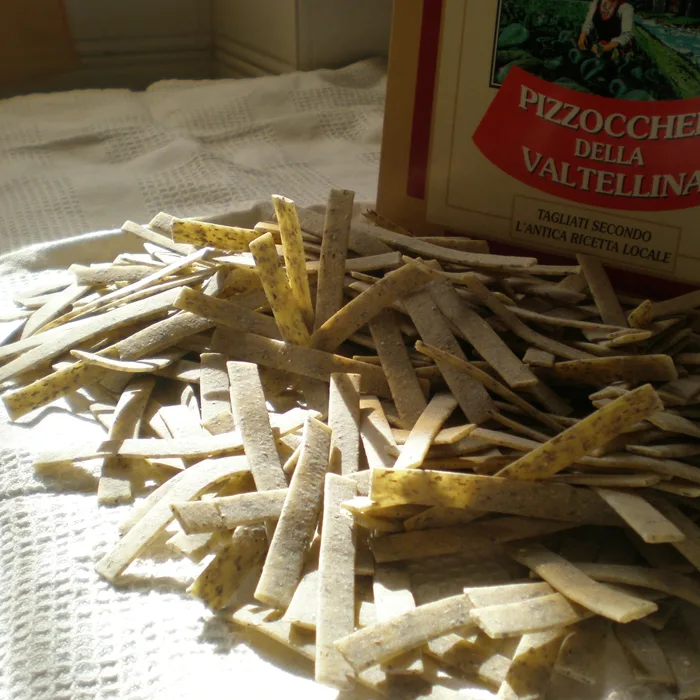
Pizzoccheri della Valtellina
Buckwheat ribbons cooked with potatoes and Savoy cabbage, dressed with butter, garlic and Valtellina Casera cheese. Hearty mountain food.
They hold PGI status, and their home is Teglio, in the Valtellina.
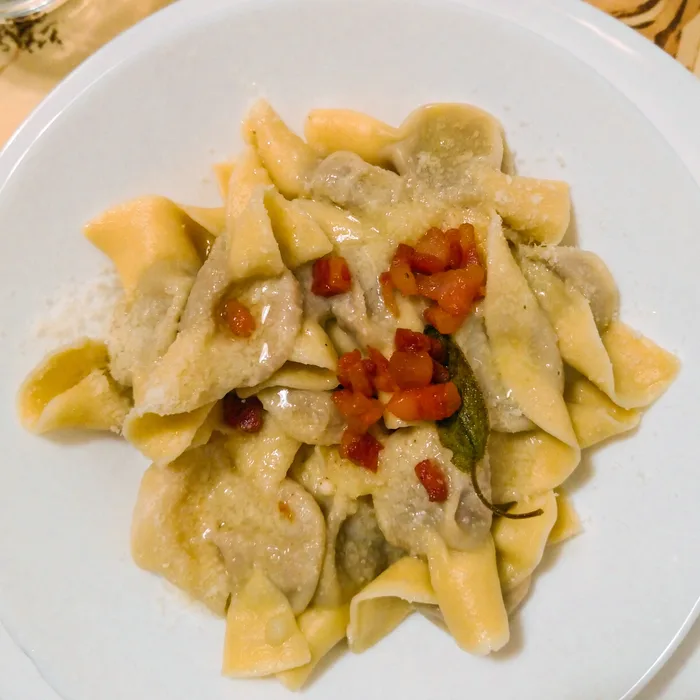
Casoncelli alla bergamasca
Pasta filled with meat, bread, cheese and sometimes amaretti and raisins, dressed with melted butter, sage and pancetta.
The recipe changes from valley to valley: Brescia says casoncelli, Bergamo often casonsèi.
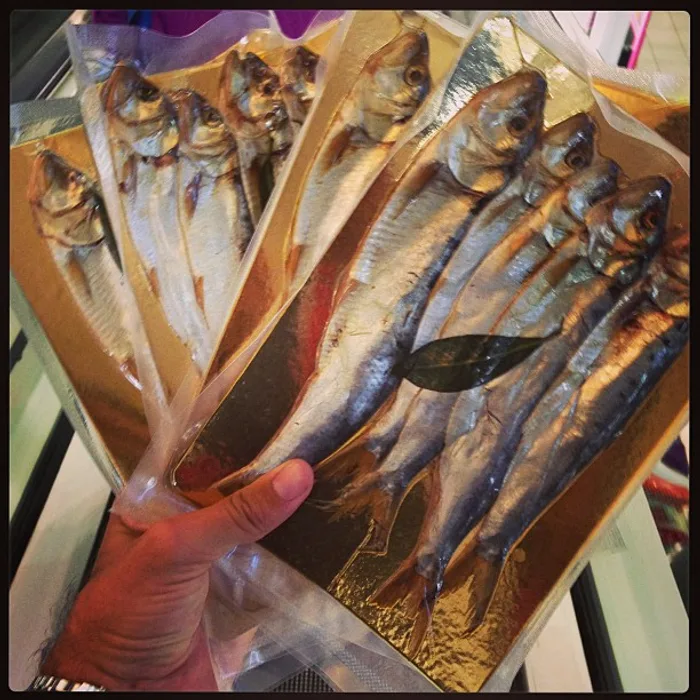
Missoltini
Twaite shad from Lake Como, sun-dried and preserved under salt and bay leaves, then grilled and served with polenta.
A way to have lake fish through the winter: the name comes from the missolta, the container they were pressed into.
Sweets
Lombard sweets follow the calendar: Christmas, Easter and saints' days. Some are now found all year; others still are not.
Panettone
Milan's Christmas cake: a long rise, raisins and candied orange and citron. On 3 February, Saint Blaise's day, the last saved slice is eaten.
Colomba
The dove-shaped Easter cake, with candied peel and an almond glaze. Born in Milan's twentieth-century confectionery industry.
Pan de mej
Sweet bread of maize and millet flour, scented with elderflower. A tradition of 23 April, Saint George's day.
Torta paradiso
A light sponge of flour, potato starch, butter and eggs under a snow of icing sugar. It comes from Pavia, where it is credited to a nineteenth-century pastry cook.
Amaretti di Saronno
Crisp almond and apricot-kernel biscuits, wrapped in pairs in tissue paper. Saronno is on the Malpensa Express line.
The wines of Lombardy
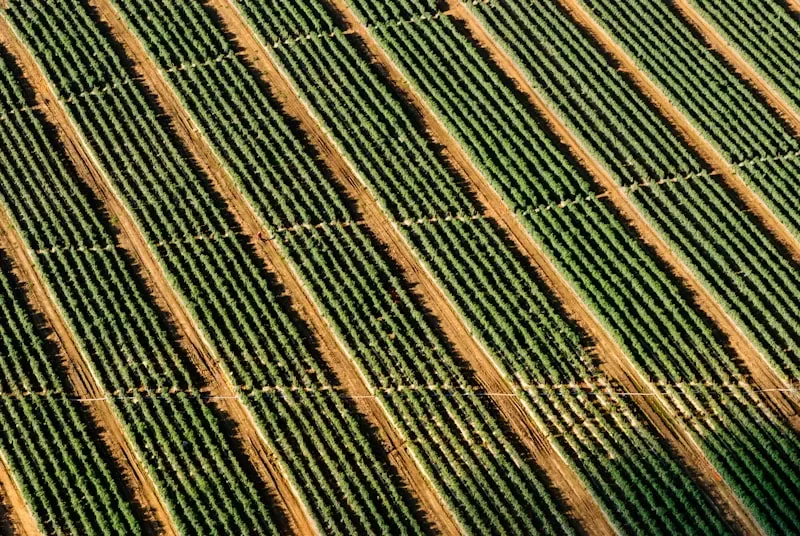
Four appellations that explain the region better than a map: sparkling wine, hills and mountain vineyards.
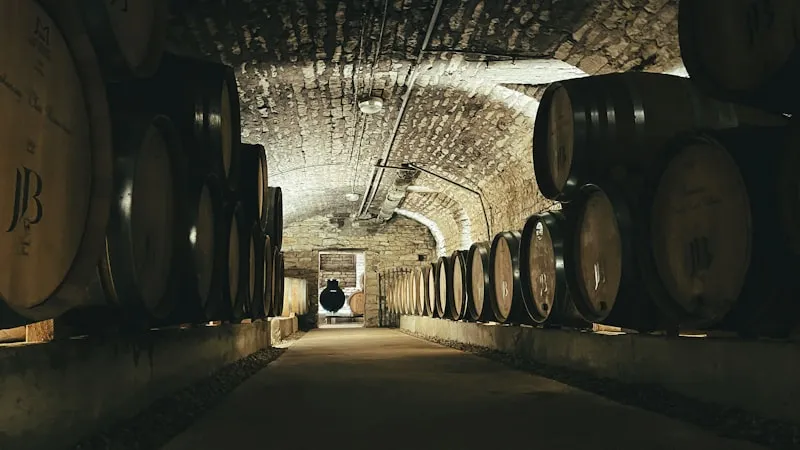
Franciacorta DOCG
Lombardy's traditional method
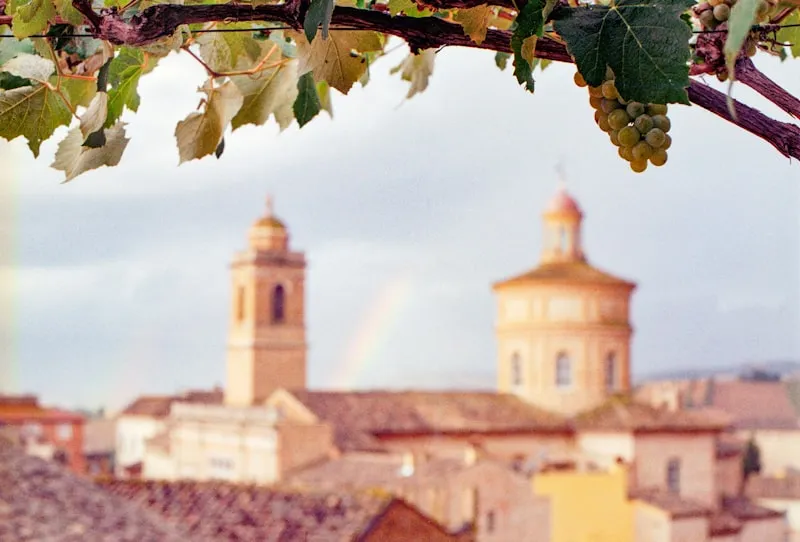
Bottle-fermented sparkling wine from Chardonnay, Pinot Noir and Pinot Blanc, grown in the hills between Brescia and Lake Iseo. Satèn is the softest style.
Oltrepò Pavese
The Pinot Noir hills
South of the Po, the Italian area with the most Pinot Noir, made both as a red and as traditional-method sparkling. It is also home to Bonarda, red and lightly sparkling.
Valtellina Superiore DOCG
Nebbiolo on the terraces
Here Nebbiolo is called Chiavennasca and grows on dry-stone terraces along the valley's sunny slope. Sforzato is made from dried grapes.
Moscato di Scanzo DOCG
The smallest DOCG
A sweet red from dried grapes, made in tiny quantities on the hills of Scanzorosciate near Bergamo. One of Italy's smallest appellations.
Our concierge
Practical advice from people who drive between Milan and the lakes every day.
An hour from Milan
Four places worth a day that almost no visitor puts on the plan.
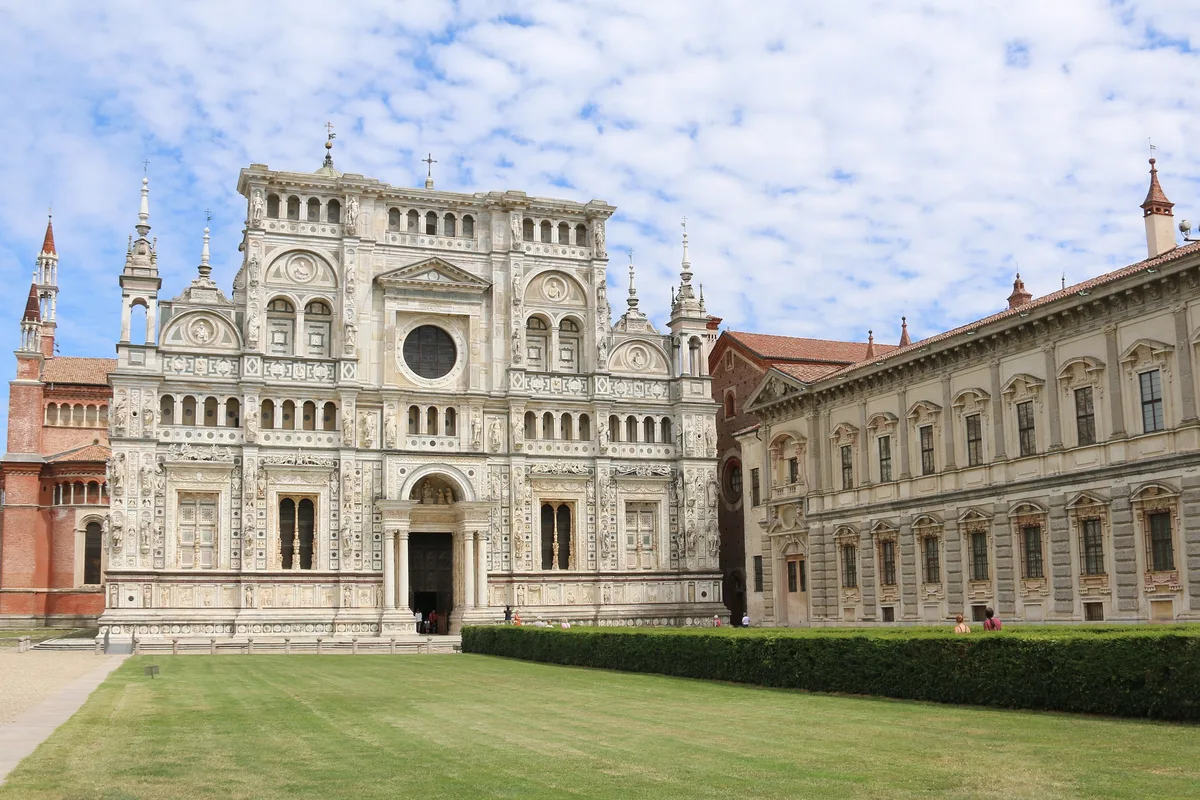
Pavia and the Certosa
The Certosa di Pavia with its inlaid marble façade, then Pavia itself: the covered bridge over the Ticino and the university courtyards.
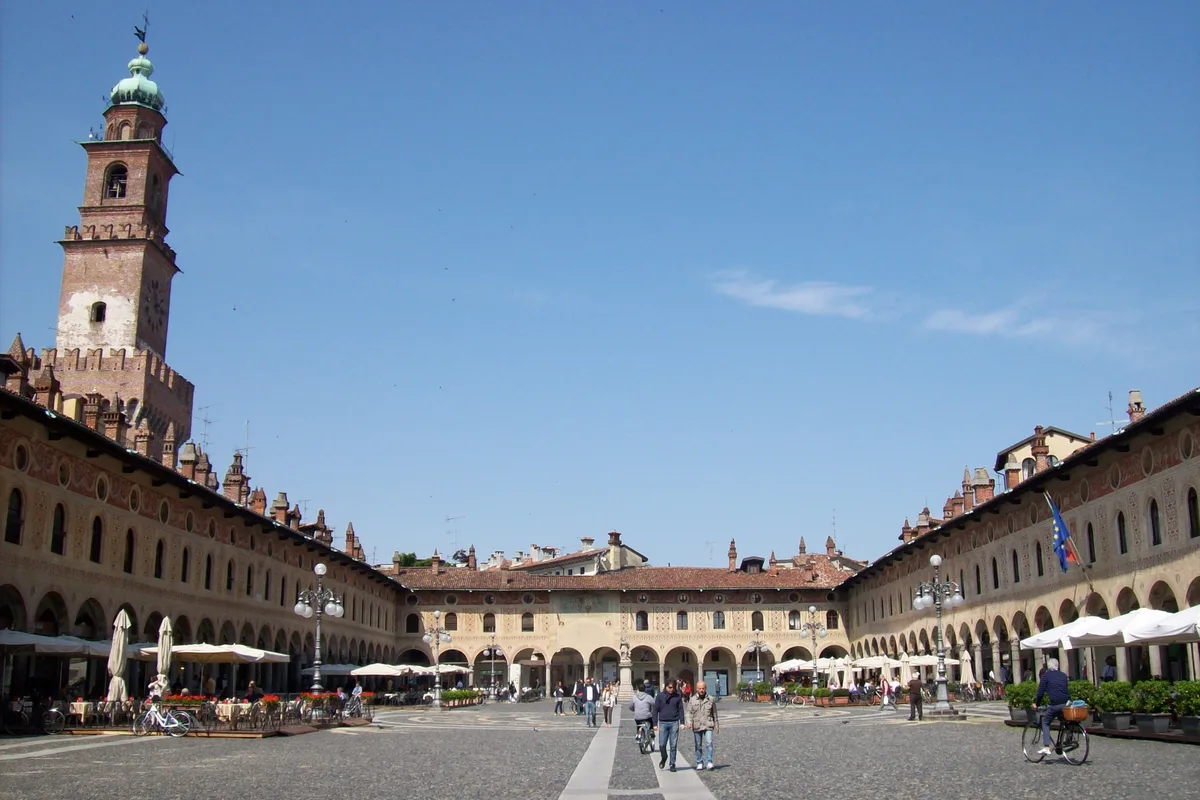
Vigevano
Piazza Ducale, commissioned by Ludovico il Moro in the late fifteenth century, with the Sforza castle behind it. An hour's stroll, lunch, and back.
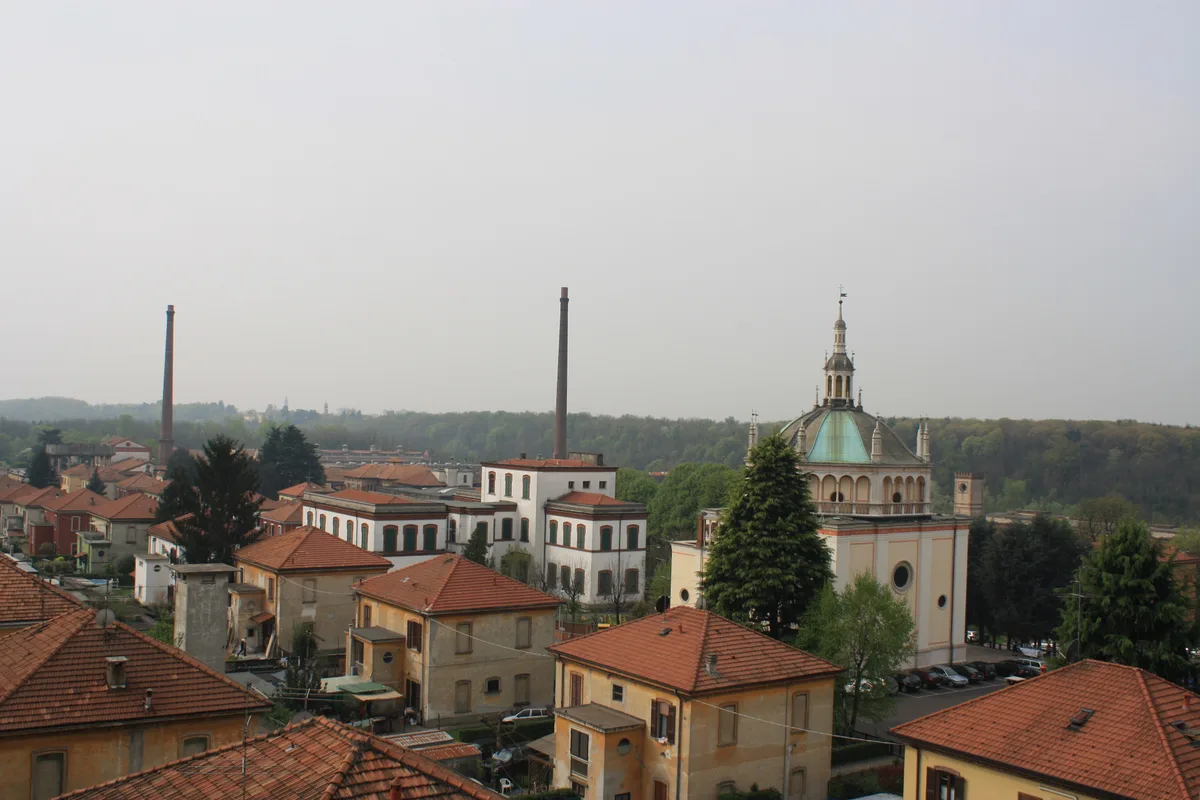
Crespi d'Adda
The company village built around a cotton mill on the Adda, a UNESCO site: houses, school, church and cemetery just as the Crespi family planned them.
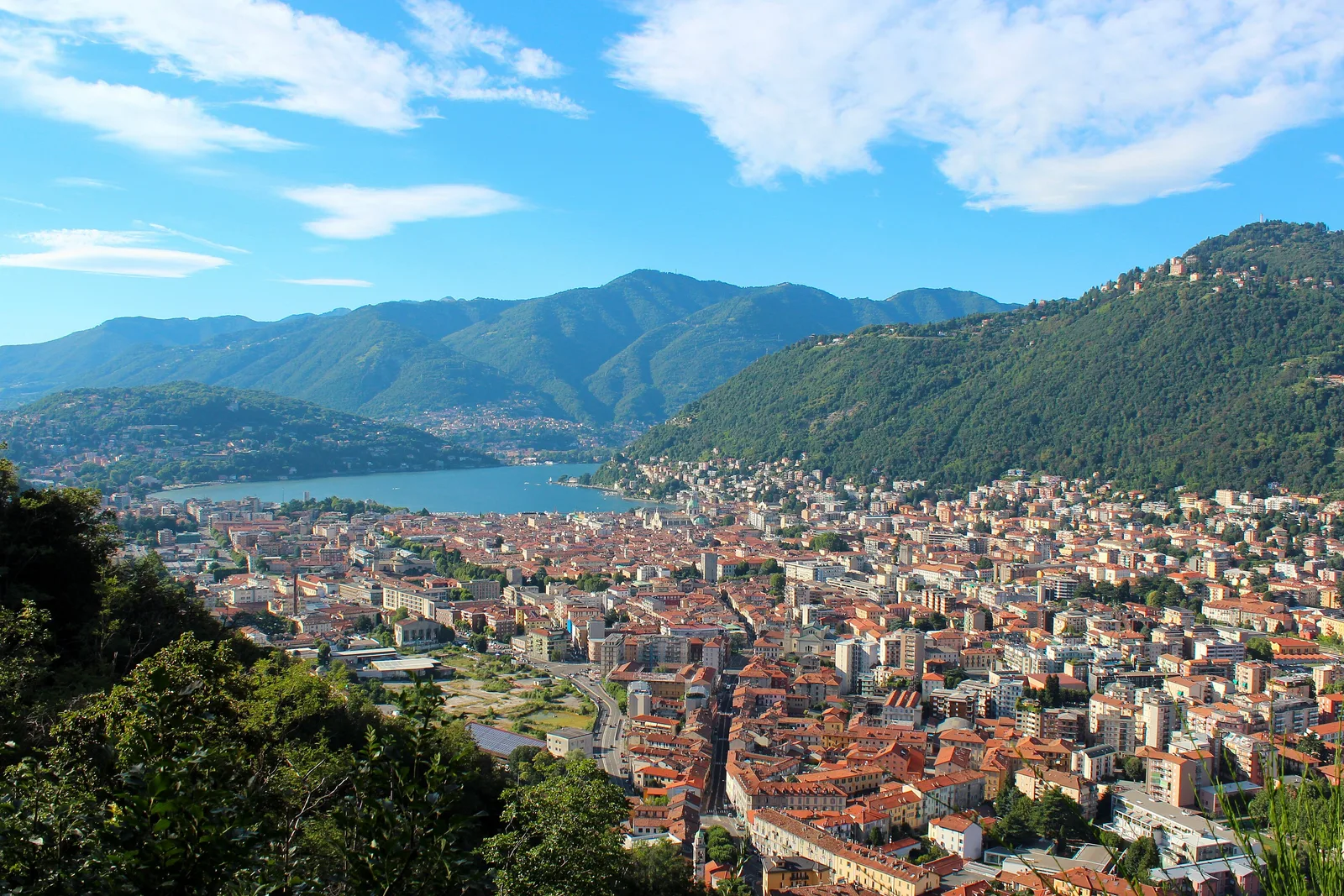
Como
The cathedral, the lakeside walk to Villa Olmo and the funicular up to Brunate, where the southern lake opens up all at once.
The golden hour
Where to ask for a stop, if your transfer falls at the right time of day.
| Route | Sunset spot | Why it's special |
|---|---|---|
| Malpensa → Stresa | Stresa lakefront | The Borromean Islands ahead, with late-afternoon light on the water |
| Malpensa → Bellagio | Punta Spartivento | The point where the lake splits in two, both arms in view at once |
| Malpensa → Tremezzo | Statale Regina above Lenno | The Balbianello headland seen from above on the lake road |
| Bergamo → Varenna | Varenna lakeside walk | Bellagio across the water as the sun goes down |
| Malpensa → Orta San Giulio | Sacro Monte di Orta | The island of San Giulio from above, between chapels and trees |
| Linate → Milan | Piazza Gae Aulenti | The Porta Nuova towers lighting up at dusk |
| Malpensa → Cervinia | Breuil-Cervinia | The Matterhorn taking on colour in the last minutes of sun |
The soundtrack
What we play on board when the guest has no playlist of their own.
Airport transfer
Verdi, who made his name at La Scala with Nabucco and lived in Milan until his death in 1901: "Va, pensiero" as the city draws near.
Towards the lake
Bellini, who composed on the shores of Lake Como: long melodic lines for a road that follows the water's edge.
Back after dinner
Soft jazz at low volume, for anyone who has walked all day between museums, shops and the Navigli.
Business travel
Silence, or whatever you ask for. On board you can work, take calls or sleep: your choice.
Ready to go?
Book your transfer and give us your hotel and flight number: we take care of the right terminal and the final stretch.
Book now